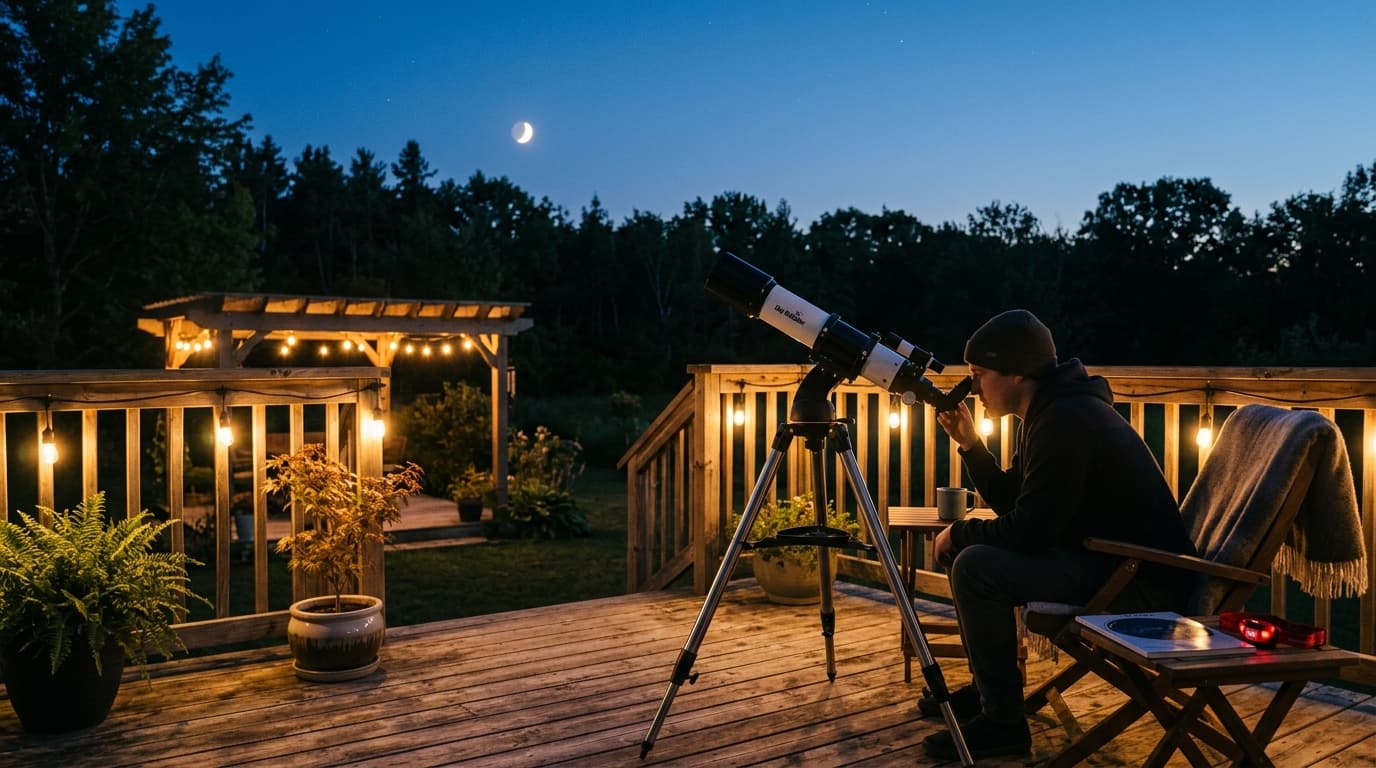

The Sky-Watcher Virtuoso GTi 150P is the best telescope for most beginners in 2026. It puts 150mm of aperture, enough to show real detail on planets and to start resolving globular clusters, on a GoTo mount that finds and tracks targets for you, and it does it for $445.55. It is not the cheapest option on this list, but it is the one you are least likely to outgrow.
Two notes before the picks. Our previous top pick, the Celestron NexStar 130SLT, has been unavailable on Amazon for months and is out of this list until it returns. And our scoring engine now accounts for optical execution, meaning whether a reflector's mirror is parabolic or spherical and whether its focal length is real or manufactured by a Barlow lens hidden in the focuser. Two former picks in this guide, the Celestron 114LCM and StarSense Explorer LT 114AZ, are that second kind of scope, and they are gone. What to Avoid explains how to spot one.
Quick Picks
| Telescope | Best For | Overall Score | Price |
|---|---|---|---|
| Sky-Watcher Virtuoso GTi 150P | Best overall, best GoTo | 76 | $445.55 |
| Celestron StarSense Explorer DX 130AZ | Best app-guided | 74 | $499.95 |
| Celestron Travel Scope 70 | Best under $100 | 69 | $89.99 |
| Celestron NexStar 127SLT | Best for planets | 79 | $679.99 |
| Celestron AstroMaster 102AZ | Best refractor | 72 | $261.68 |
| Sky-Watcher Heritage 150P | Best tabletop Dobsonian | 68 | $309 |
| Sky-Watcher Heritage 130P | The community's default first scope | 67 | $269 |
How We Chose These
Every telescope on WhichScope is scored across 7 dimensions: overall performance, value, beginner-friendliness, astrophotography capability, portability, planetary viewing, and deep-sky performance. The beginner score specifically weights GoTo availability, smart features, included accessories, lower price, lighter weight, and simpler optical designs. For this list we filtered to active, in-stock telescopes, reviewed their overall scores, and then curated for a mix of types and prices so there is a strong recommendation whatever your budget; the order below is editorial, not a strict score ranking. The table shows overall score, the same number you see on every product page and in every other roundup on this site.
Since this guide was first written the engine gained an optical-execution factor. A spherical mirror is fine at f/8 or slower and progressively worse as it gets faster; a Bird-Jones, which is a fast spherical mirror with a corrector lens in the focuser sold as a long-focal-length Newtonian, is penalized outright. Two scopes we used to recommend here dropped from the mid-70s and low-80s to the 60s on that change alone.
All scores and prices are pulled directly from our database. Prices reflect current Amazon listings and update daily.
Our Top Picks
1. Sky-Watcher Virtuoso GTi 150P: Best Overall
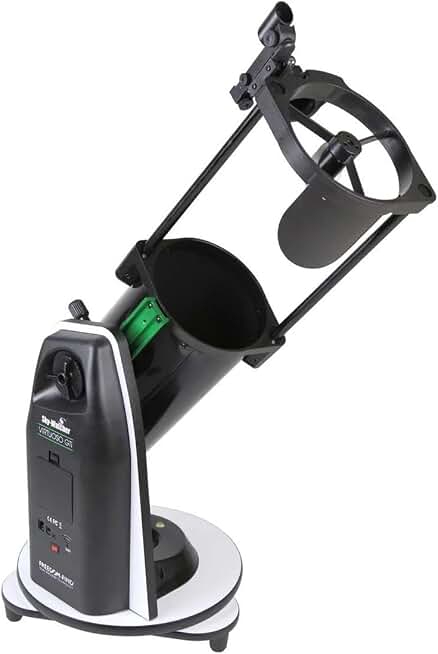
Sky-Watcher
Sky-Watcher Virtuoso GTi 150PGoTo Dobsonian power in a tabletop package, with Wi-Fi control and the freedom to push around manually.
The Virtuoso GTi 150P is the telescope we recommend to most beginners because it solves the two problems that end most first years in astronomy: not enough aperture to see anything satisfying, and not being able to find anything at all. It puts the same 150mm f/5 collapsible optical tube format as the Heritage 150P on a motorized tabletop Dobsonian base with built-in WiFi. Align using one of four methods in the free SynScan Pro app, pick any of more than 10,000 objects, and the mount slews to it and tracks it. Sky-Watcher's Freedom Find dual encoders let you push the tube by hand like an ordinary Dobsonian without losing alignment, so it still feels like a telescope rather than a robot.
150mm gathers enough light to show Saturn's rings with the Cassini Division on a steady night, Jupiter's belts with real contrast, the Orion Nebula with structure, and globular clusters beginning to resolve into stars at the edges. 52 Amazon reviews averaging 4.2 stars is a small sample, but Sky-Watcher's Heritage and Virtuoso lines have a long track record in the community.
Who it is for: Adults or teens who want a telescope that will last years, not months, and who want the finding done for them.
The tradeoff: At 11.7kg it is the heaviest telescope on this list, and it is a tabletop design, so you supply a sturdy table or a milk crate. It runs on 8 AA batteries or an external 12V supply. It tracks in alt-azimuth, so it is not an astrophotography platform beyond the Moon and planets. And the SynScan app has a steeper first-night learning curve than a hand controller.
Our top pick for beginners. 150mm of aperture with GoTo that finds and tracks for you.
2. Celestron StarSense Explorer DX 130AZ: Best App-Guided
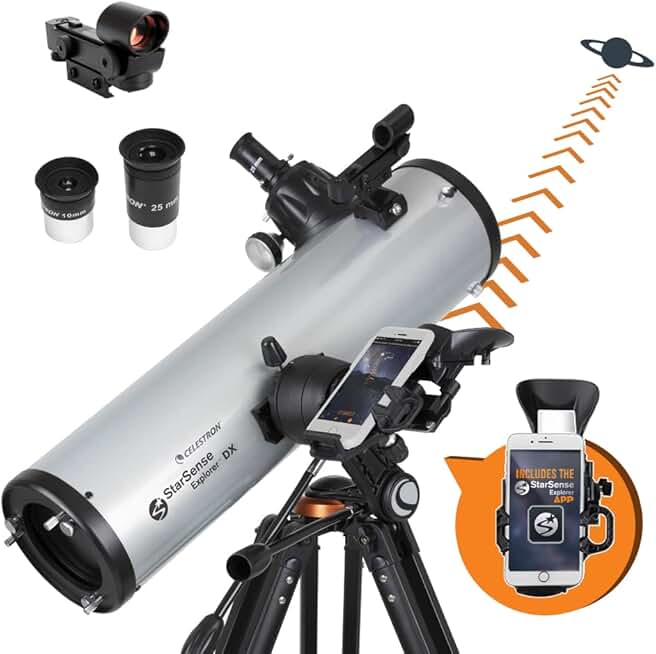
Smart phone-powered star finding meets a capable 130mm reflector, making the night sky genuinely accessible for beginners.
The StarSense Explorer system is Celestron's clever middle ground between manual and GoTo. Dock your phone, and the app uses its camera to solve the sky and draw arrows to any target; you push the telescope until they say stop. It is not GoTo, you do the moving, but it ends the "I do not know where anything is" problem that frustrates most beginners. The DX 130AZ is the StarSense scope to buy because Celestron's spec sheet lists a parabolic primary mirror: 130mm at f/5 with a 650mm focal length in a 635mm tube, a real Newtonian with the right mirror, unlike the cheaper StarSense models we no longer recommend.
130mm of properly figured aperture shows the Orion Nebula with structure, the Andromeda Galaxy's core, dozens of clusters, and Saturn's rings cleanly. The alt-azimuth mount has slow-motion controls on both axes. The included 25mm and 10mm eyepieces give 26x and 65x according to Celestron. At 8.16kg it is a one-trip carry. 1,550 Amazon reviews averaging 4.1 stars.
Who it is for: Beginners who want help finding objects but prefer a lower price than GoTo, or who enjoy moving the telescope themselves and learning the sky as they go.
The tradeoff: No motorized tracking. Once you find an object it drifts out of view as Earth rotates, so you nudge the scope every minute or so; at high magnification on planets this gets tiring. The app needs a recent smartphone. Newtonians need occasional collimation.
App-guided finding on a parabolic 130mm mirror. The StarSense to buy.
3. Celestron Travel Scope 70: Best Under $100
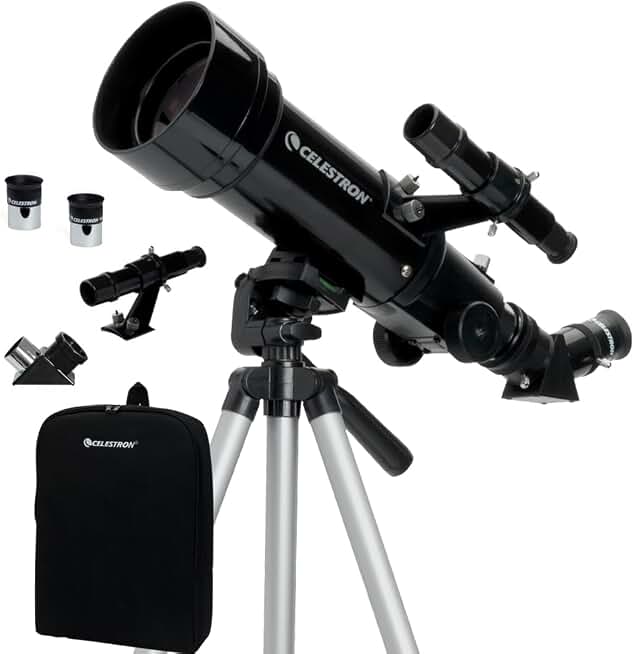
A capable 70mm grab-and-go refractor that earns its place in any beginner's kit without breaking the bank.
At $89.99, the Travel Scope 70 is the best way to find out if astronomy is for you without making a big financial commitment. It is a 70mm achromatic refractor with a 400mm focal length, which means wide fields of view, sharp images of the Moon, and visible Saturn rings and Jupiter bands (small, but there). With well over fourteen thousand Amazon reviews at 4.2 stars, it is one of the most-reviewed telescopes in our database.
The whole package weighs under 2kg and fits in the included backpack. There is no GoTo, no tracking, no automation. You point it at things and look. For the Moon, star clusters, and your first look at the planets, that is genuinely enough.
Who it is for: Complete beginners, kids, travelers, or anyone who wants a grab-and-go telescope for under $100.
The tradeoff: 70mm of aperture is physically limited. Faint nebulae and galaxies will be invisible or barely visible. If you catch the astronomy bug, you will want more aperture within a few months.
The best starter telescope for under $100.
4. Celestron NexStar 127SLT: Best for Planets
Celestron
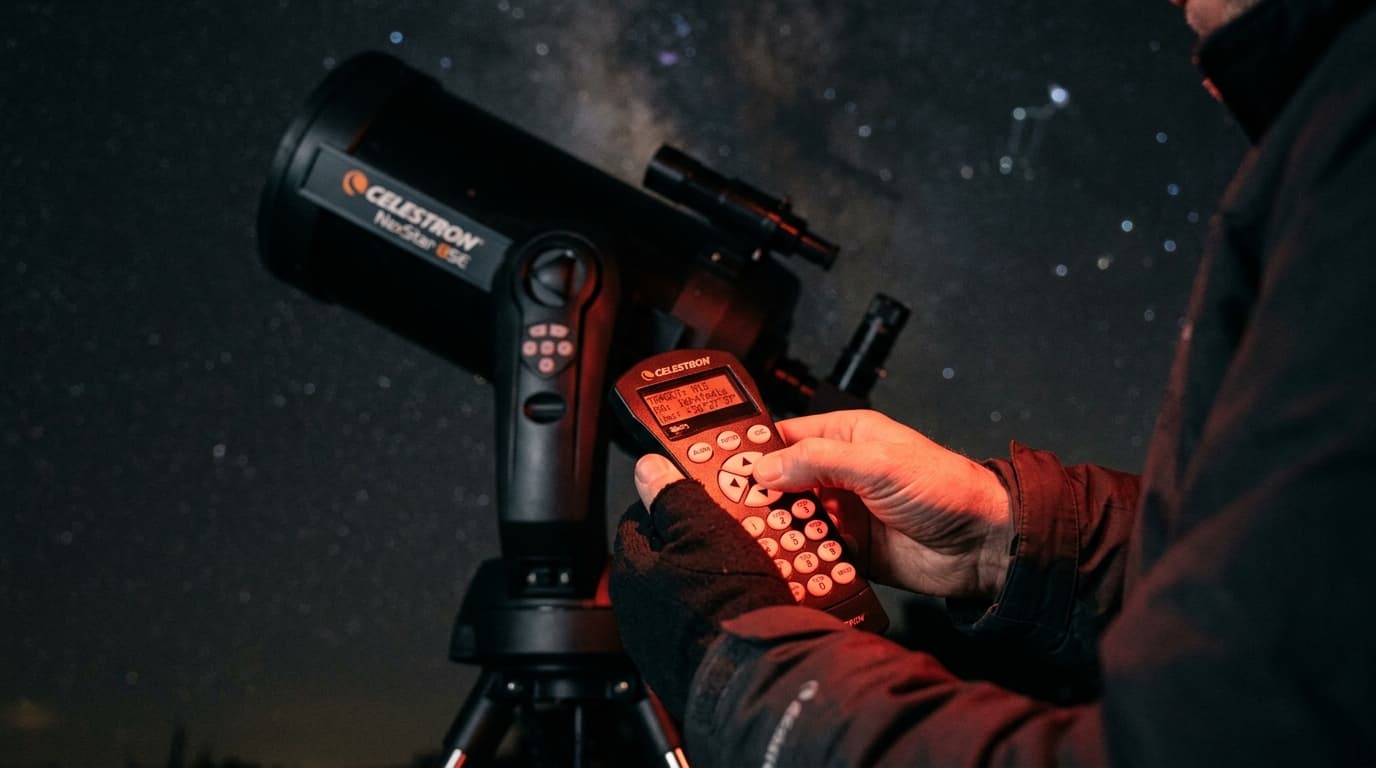
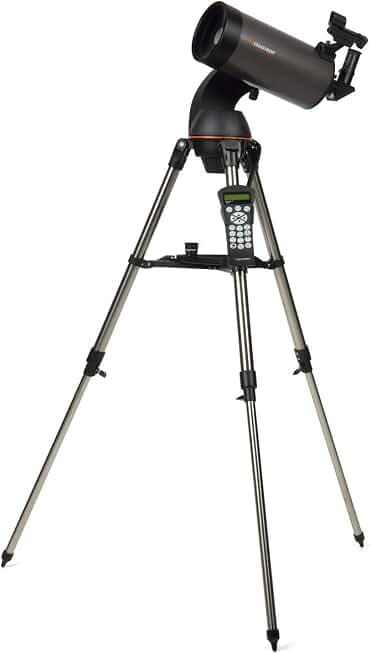
Celestron NexStar 127SLT127mm Maksutov-Cassegrain GoTo telescope that punches above its weight for planetary and lunar observing
If Saturn's rings and Jupiter's Great Red Spot are what drew you to astronomy, the 127SLT is built for that. (See our full best telescopes for planets and galaxies guide for more options.) The 127mm Maksutov-Cassegrain design excels at high-contrast planetary detail. The long 1500mm focal length (f/11.8) delivers high native magnification, and the sealed tube never needs collimation, which is one less thing for a beginner to worry about.
The GoTo mount is Celestron's NexStar system, locating 4,000+ objects automatically after a SkyAlign on a few bright stars. With almost 1,200 Amazon reviews at 4.2 stars, this is a well-proven scope. The fork mount is compact and reasonably stable.
Who it is for: Beginners whose primary interest is the Moon and planets, and who value sharp, high-contrast views over wide-field deep-sky sweeping.
The tradeoff: The f/11.8 focal ratio means narrow fields of view. Large nebulae and open clusters will not frame well. It is 8.2kg, and the Mak design takes 20-30 minutes to reach thermal equilibrium when you bring it outside on a cold night. At $679.99 it is the most expensive pick here.
The best GoTo scope for planetary and lunar observing.
5. Celestron AstroMaster 102AZ: Best Refractor
Celestron
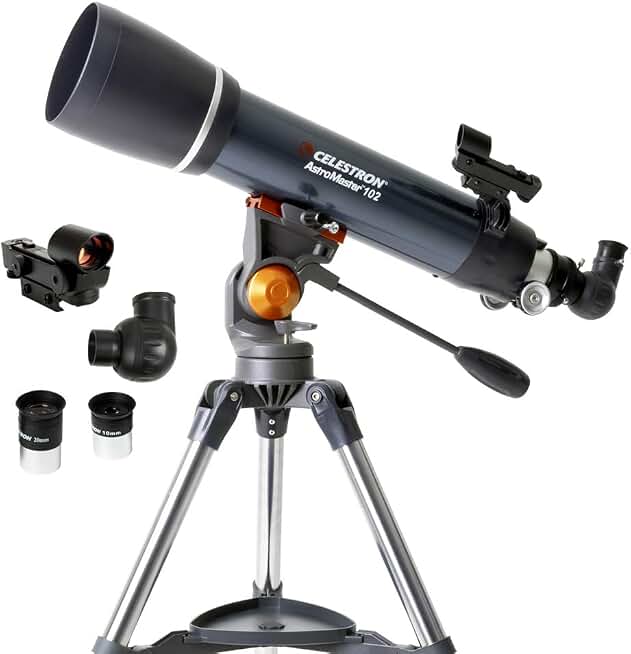
Celestron AstroMaster 102AZA capable 102mm refractor that gets you outside and observing on your first night out
Refractors are the simplest telescopes to own: no mirror to collimate, no corrector to worry about, and what you see on night one is what you see on night five hundred. The AstroMaster 102AZ is the most capable one you can buy for under $300. A 102mm (4-inch) achromat at 660mm focal length (f/6.5), it gathers more than twice the light of a 70mm scope and resolves visibly more detail on Jupiter's belts, Saturn's rings, and the Moon.
The alt-azimuth mount has slow-motion controls on both axes and a full-height steel tripod. The included 20mm and 10mm eyepieces give 33x and 66x according to Celestron's spec sheet, and the built-in red-dot finder is easy to align. At 5.84kg the whole setup is carryable in one trip. 351 Amazon reviews averaging 4.3 stars. It is our top pick in the under $300 guide.
Who it is for: Beginners who want zero maintenance and the most optical capability under $300, Moon-and-planet observers who also want a crack at the brighter clusters.
The tradeoff: No tracking and no finding aid beyond the red dot; you learn the sky or use a phone app. Achromatic optics show some violet fringing on the Moon's limb and on Venus at high power, which is normal for every refractor at this price. A 130mm Dobsonian will beat it on faint targets.
102mm of refractor aperture, nothing to collimate, under $300.
6. Sky-Watcher Heritage 150P: Best Tabletop Dobsonian
Sky-Watcher
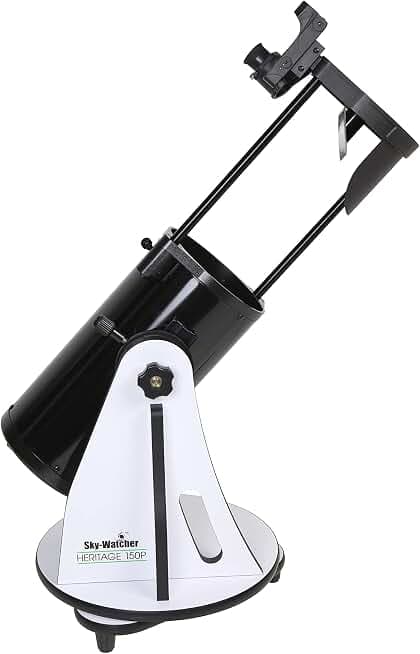
Sky-Watcher Heritage 150PBig views, compact package: the Heritage 150P brings serious aperture to a tabletop Dobsonian under $400.
The Heritage 150P puts 150mm (6 inches) of parabolic-mirror aperture on your patio table for $309. That is as much light-gathering as our top pick without the motors, and it matters: more aperture means brighter, more detailed views of nebulae, galaxies, and star clusters. The Dobsonian mount is the simplest design in astronomy. Push it to point at something, look through the eyepiece.
The collapsible tube makes it surprisingly compact for storage and transport. At 9.3kg it is heavier than a refractor but manageable. Amazon reviewers give it 4.6 stars across 74 reviews, the highest rating of any telescope on this list.
Who it is for: Beginners who prioritize optical quality and views over automation, and who are happy to learn the sky. Ideal if you have a dark site nearby or want the most aperture per dollar.
The tradeoff: No GoTo, no tracking, no electronics. You learn basic star-hopping or use a phone app as a finder chart. It needs a sturdy table or a separate stand. Newtonians need occasional collimation, though it sounds harder than it is.
150mm of parabolic aperture on a tabletop Dob. Maximum light per dollar.
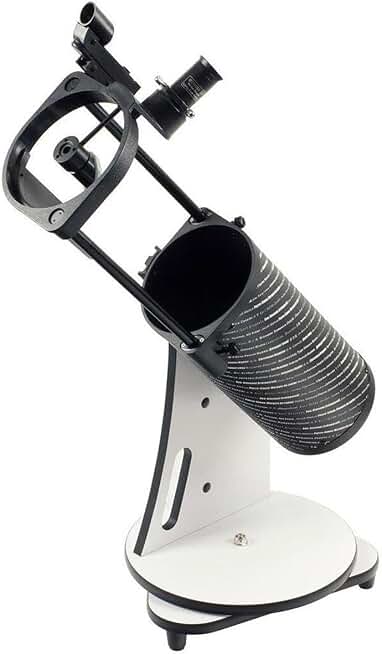
7. Sky-Watcher Heritage 130P: The Community's Default First Scope
Sky-Watcher
Sky-Watcher Heritage 130PBig aperture, tabletop convenience: the Heritage 130P punches well above its price and size class.
Ask r/telescopes what a beginner should buy and the Heritage 130P is the answer you will get most often, and have for a decade. A 130mm parabolic mirror at f/5 on a collapsible tabletop Dobsonian for $269: it gathers well over three times the light of a 70mm refractor, shows the Orion Nebula with structure and Saturn's rings cleanly, and has nothing hidden in the focuser. It is the telescope most reviews of the budget Bird-Jones reflectors end by recommending instead.
At 8.69kg it needs a sturdy table or a milk crate. 69 Amazon reviews averaging 4.5 stars, a small sample but consistently high. The included 25mm and 10mm eyepieces give 26x and 65x.
Who it is for: Beginners who want the most honest aperture for about $270 and do not need help finding things.
The tradeoff: No tracking, no electronics. The 150P gives you noticeably more on faint targets for the extra money, and the GTi adds GoTo on top of that. Needs a table.
130mm parabolic Dobsonian. The beginner scope the community keeps recommending.
What Makes a Good Beginner Telescope?
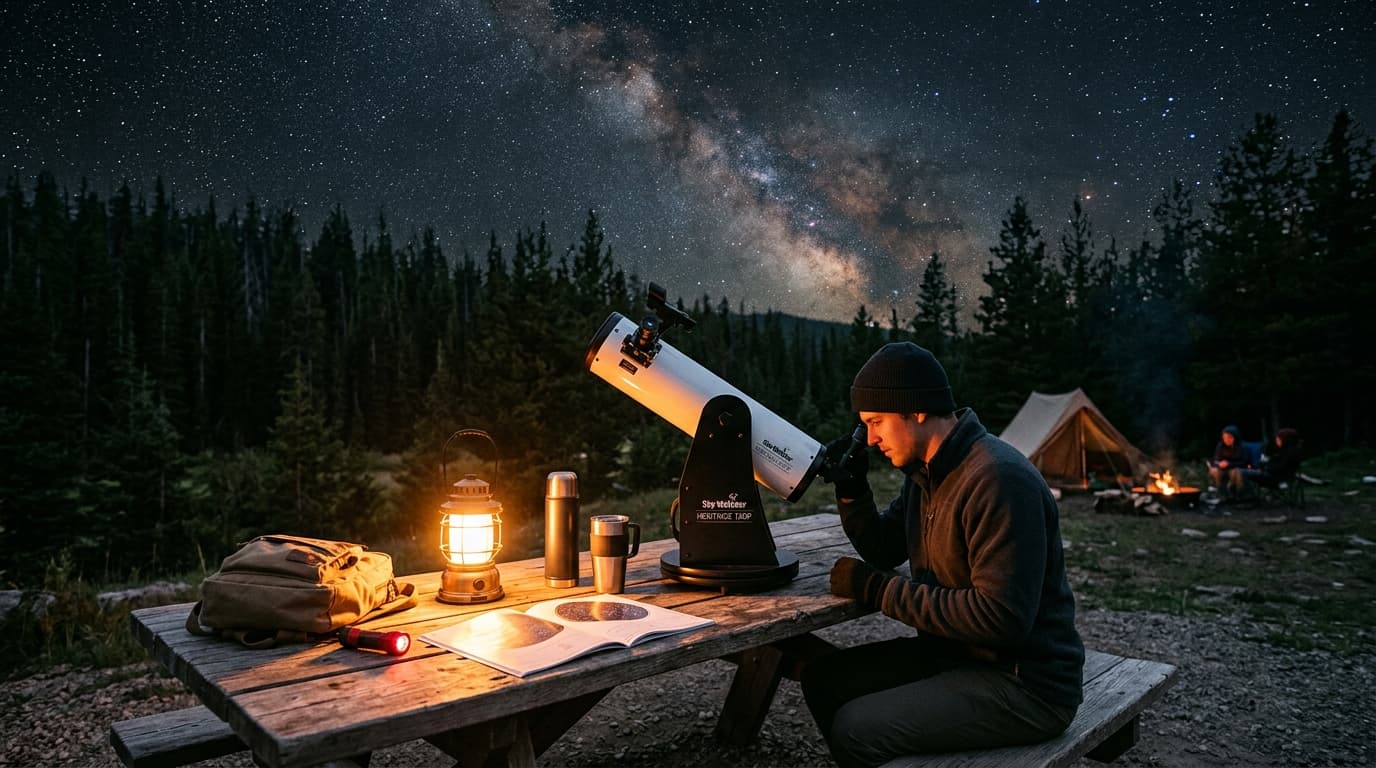
If you are still deciding, here are the specs that actually matter for a first telescope. If you are not sure whether to start with binoculars, see our binoculars vs telescope guide. For the deep dive on telescope types, see our types of telescopes guide.
Aperture
Aperture is the diameter of the main mirror or lens. It determines how much light the telescope collects, which directly controls how bright and detailed your views are. A 70mm refractor shows the Moon beautifully and Saturn's rings as a tiny oval. A 130mm reflector shows Saturn's Cassini Division, Jupiter's cloud bands, and dozens of deep-sky objects. For beginners, 70-150mm is the sweet spot where you get meaningful views without excessive weight or cost.
The Mirror Behind the Aperture
Aperture is only half the story for a reflector. A Newtonian's primary mirror should be parabolic; a spherical mirror is fine at f/8 or slower but gets progressively softer as the mirror gets faster. And some budget "Newtonians" are Bird-Jones designs: a fast spherical mirror with a Barlow lens built into the focuser to fake a long focal length, which Celestron's own knowledgebase describes for its AstroMaster 114 line. The tell is a 1000mm focal length in a tube 40-60cm long. Manufacturer spec sheets usually say "parabolic" or "spherical"; if a sheet says spherical and the tube is short, keep walking.
Mount Type
The mount matters as much as the optics. For beginners, alt-azimuth (up-down, left-right) and Dobsonian mounts are far simpler than equatorial mounts. Equatorial mounts align with the Earth's rotation axis, which is useful for tracking, but the setup is confusing for new users. Start with alt-az or Dob unless you have a specific reason to go equatorial.
GoTo vs Manual
GoTo mounts find objects automatically after a brief alignment. Manual mounts require you to aim the telescope yourself using star charts or an app. GoTo adds $150-$300 to the price but eliminates the most frustrating part of beginner astronomy: "I can't find anything." If your budget allows, GoTo is worth it.
Included Accessories
Check whether the telescope comes with eyepieces, a finderscope, and a star diagonal (for refractors). Most beginner scopes include at least two eyepieces. Budget scopes often include lower-quality eyepieces that work but do not impress. You can always upgrade eyepieces later for $30-50 each.
Weight and Setup
A telescope you do not take outside is a telescope you do not use. Factor in total weight, setup time, and whether you have somewhere to store it assembled. A 15kg scope on a tall tripod is a very different commitment than a 3kg grab-and-go refractor.
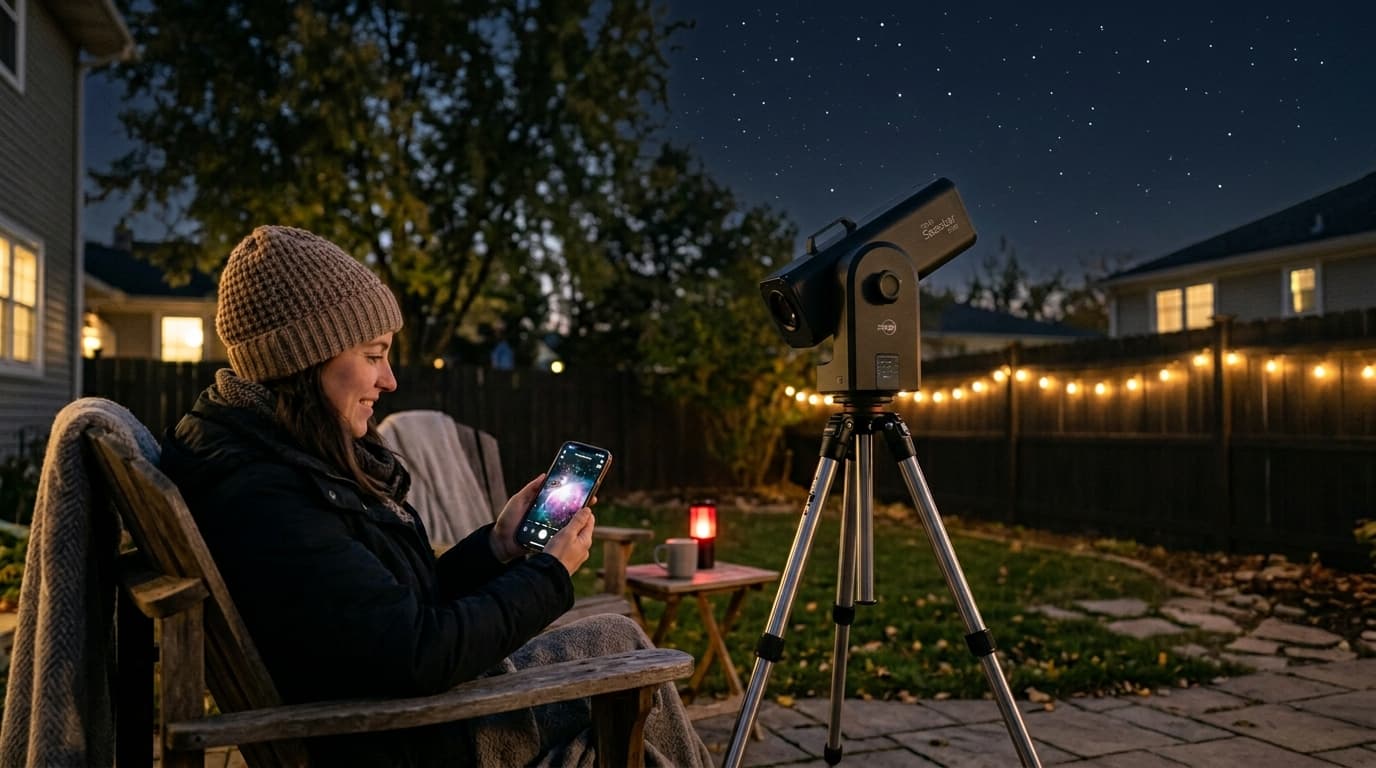
If you are drawn to astrophotography or the idea of viewing on a screen rather than through an eyepiece, consider a smart telescope. They handle alignment, tracking, and image stacking automatically and are the easiest telescopes to use, though the experience is fundamentally different from eyepiece observing. The ZWO Seestar S50 and S30 are the highest-scoring telescopes in our database, but both have been out of stock on Amazon for months. The smart scope you can buy today is the DWARFLAB DWARF 3 at $549, which weighs 1.3kg and pairs a telephoto lens with a wide-angle one; read our DWARF 3 review for a full assessment.
What to Avoid
Bird-Jones reflectors. The Celestron 114LCM and StarSense Explorer LT 114AZ used to be picks in this guide. Both are 114mm scopes with a nominal 1000mm focal length in a tube of roughly 60cm, and Celestron's own spec sheets describe both as "Spherical Primary Mirror"; the missing focal length comes from a Barlow lens inside the focuser. Hands-on reviewers who have taken these designs apart report that the corrector moves with the focuser, so the correction is never quite right, and that collimating requires removing it first. The PowerSeeker 127EQ and AstroMaster 114EQ are the same construction, and the PowerSeeker has its own dedicated warning subreddit, r/dontbuyapowerseeker. Our engine now scores all four between 57 and 68. The 114LCM's GoTo is real and works; if GoTo is what you want, the Virtuoso GTi 150P above gives you that on a mirror that is the right shape.
Department store telescopes. If it advertises "500x magnification" on the box, walk away. Magnification without aperture produces blurry, unusable images. Any telescope under $50 from a brand you have never heard of is almost certainly a waste of money.
Tripod-mounted reflectors with equatorial mounts under $200. The optical tube might be fine, but cheap equatorial mounts shake at every touch, make finding objects harder, and frustrate beginners into quitting. If the mount is wobbly in the store, it will be wobbly under the stars.
Buying more telescope than you will carry. A 12-inch Dobsonian shows things a 5-inch scope cannot. It also weighs 30kg and takes 20 minutes to set up. For your first year, convenience beats aperture. The best telescope is the one you actually take outside.
